
The Legal Obligations That Continue After Deportation
Part 7 of 7. When the United States removes a person it was bound to protect, the law does not simply lose sight of him. Federal courts have ordered the government to bring back people it sent abroad without the process the law requires, and the government accepts that a person who wins a petition for review after removal can have his return facilitated. What those orders require, where their limits lie, and what the Supreme Court’s review of removal to third countries, and of the risk of onward refoulement, may decide.
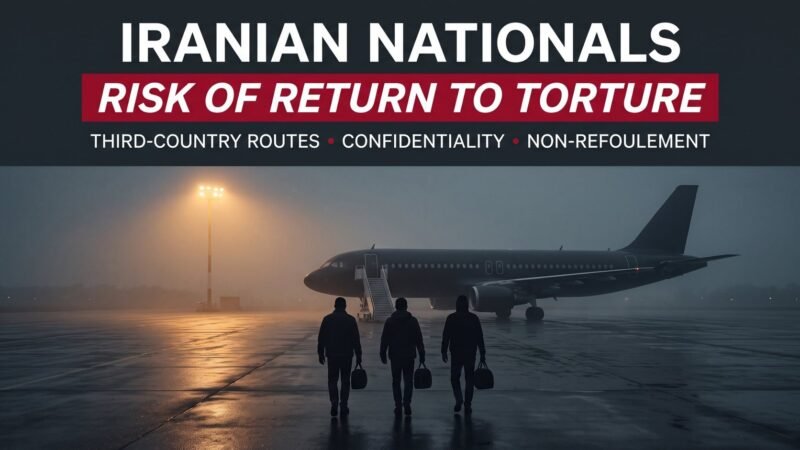
Iranian Nationals and the Risk of Return to Torture
Part 6 of 7. Since September 2025 the United States has returned more than a hundred Iranians to Iran, and it has sent others, among them people its own judges protected against return there, to the Central African Republic. In October its lawyers told a federal court that further removals to Iran were planned, by way of a third country. What the record shows, what the law requires of each route, and why the confidentiality of a protection claim is part of the protection itself.
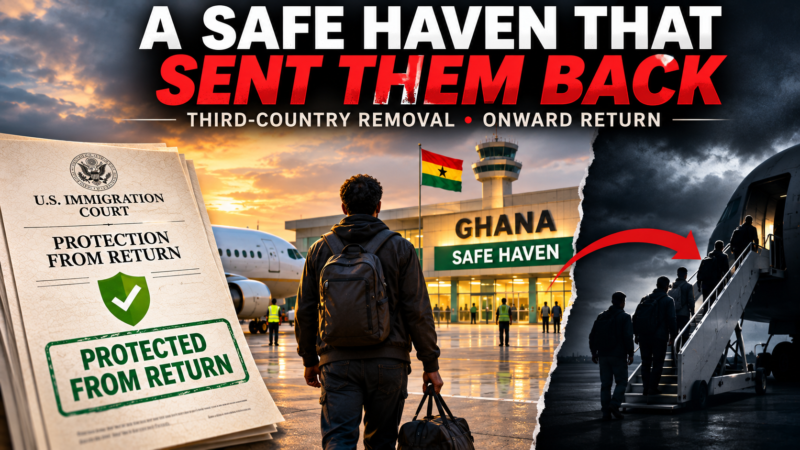
The Country That Was Supposed to Be Safe Sent Them Back
Part 4 of 7. Ghana offered West Africans deported from the United States a safe haven. People protected by American immigration judges say it sent them to the very countries those judges had ruled out. What the record shows, how the government answers it, and when a third-country removal becomes refoulement by another route.

Payments to Other Governments, and the Safeguards That Should Come With Them
Part 5 of 7. The United States has committed tens of millions of dollars to foreign governments that agree to accept people it removes. Some of the promises to protect the people sent are written in memoranda that disclaim legal effect; others are one-sided assurances; most are made by governments already bound by the Convention Against Torture. What the public record does not show is any regular means of checking that the promises are kept.
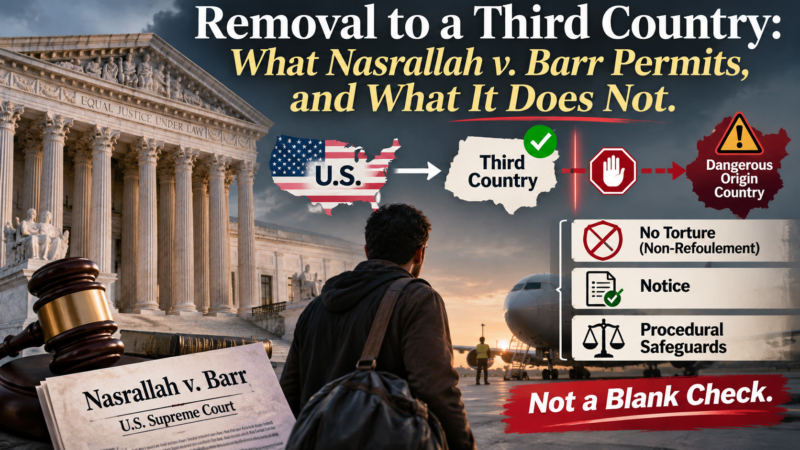
Removal to a Third Country: What Nasrallah v. Barr Permits, and What It Does Not
Part 2 of 7. How a lawful alternative to removal into torture became the center of a dispute over diplomatic assurances, notice, and the risk of onward refoulement.
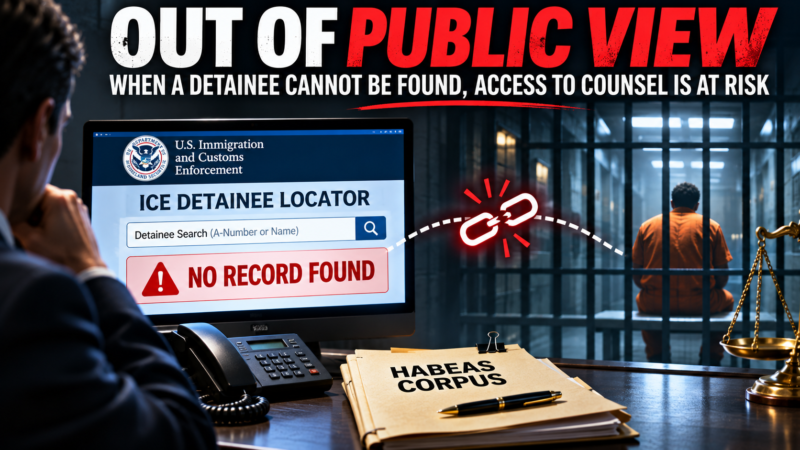
Out of Public View: The Detainee Locator Policy and Access to Counsel
Part 3 of 7. Since mid-September 2026, according to the Associated Press and the court filings that followed, people held by ICE whose orders of removal are final no longer appear in the agency’s public locator. Some of them hold protection against torture or persecution, and the remedies that protect them begin with knowing where they are held.

A Criminal Conviction Does Not End Protection Against Torture
Part 1 of 7. A conviction and a final removal order can make a person removable from the United States. Under the 1998 statute that implements the Convention Against Torture, its regulations, and decisions of the Fifth and Eleventh Circuits and the Supreme Court, neither one permits removal to a country where torture is likely.

Updates: 5 November 2026
Third Country Deportation Watch recorded the first transfers to the Dominican Republic and further flights to Panama, Paraguay, Ghana, Cameroon, Liberia, Saint Kitts and Nevis, Eswatini, Burundi and the Central African Republic. The Foreign Minister of Jamaica said nine of the 22 people sent there had left, a court in Arizona was told that a man sent to Equatorial Guinea was booked to fly back on 4 November, Human Rights First reported that a fourth flight to Iran may follow, and four amicus briefs were filed in the Supreme Court.
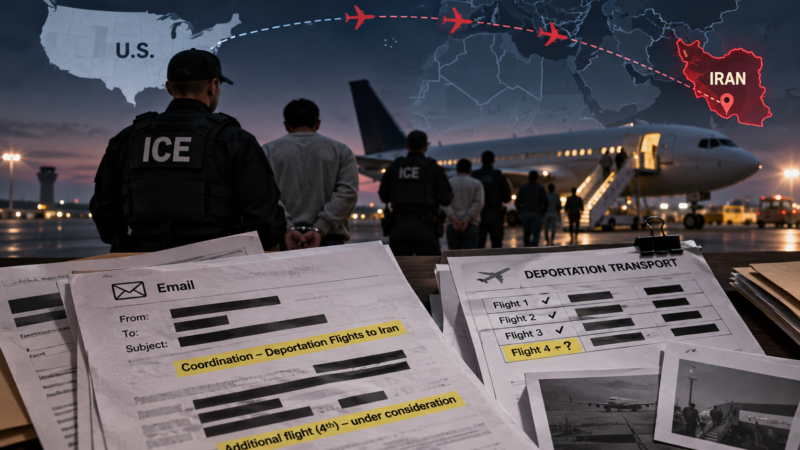
Emails Show ICE Worked With Iran on Three Deportation Flights. Human Rights First Reports That a Fourth May Follow.
The Associated Press reported in August that emails show ICE working with Iranian officials on three deportation flights to Iran. A federal court in Washington has denied a preliminary injunction in a challenge to the alleged sharing of information about Iranian asylum seekers, which the government denies. Human Rights First reports that a fourth flight may follow, and Iranians have been among the people sent to the Central African Republic.

What changed in October 2026
Jamaica received its first group of people from the United States, Sierra Leone a fifth flight, and a federal court ordered a man brought back from Equatorial Guinea. Eswatini and Burundi made statements, ICE told courts that flights to Uganda are paused, Human Rights Watch and Human Rights First published new counts, and the Supreme Court set its timetable.
Court and administrative decisions
Decided by courts and bodies in the United States, latest first.
- Lopez Gonzalez v. MullinD. Minn. · October 30, 2026
- A.M.A.S. v. MullinD. Ariz. · October 29, 2026
- Vega Oramas v. BondiD. Nev. · October 28, 2026
- A.M.A.S. v. MullinD. Ariz. · October 27, 2026
- Emetazi v. Warden, Richwood Correctional CenterW.D. La. · October 22, 2026