News & Reports
Reports and analysis on torture and refoulement from every region, with the source for each statement.
Iranian Nationals and the Risk of Return to Torture
Part 6 of 7. Since September 2025 the United States has returned more than a hundred Iranians to Iran, and it has sent others, among them people its own judges protected against return there, to the Central African Republic. In October its lawyers told a federal court that further removals to Iran were planned, by way of a third country. What the record shows, what the law requires of each route, and why the confidentiality of a protection claim is part of the protection itself.

The Legal Obligations That Continue After Deportation
Part 7 of 7. When the United States removes a person it was bound to protect, the law does not simply lose sight of him. Federal courts have ordered the government to bring back people it sent abroad without the process the law requires, and the government accepts that a person who wins a petition for review after removal can have his return facilitated. What those orders require, where their limits lie, and what the Supreme Court’s review of removal to third countries, and of the risk of onward refoulement, may decide.

The Country That Was Supposed to Be Safe Sent Them Back
Part 4 of 7. Ghana offered West Africans deported from the United States a safe haven. People protected by American immigration judges say it sent them to the very countries those judges had ruled out. What the record shows, how the government answers it, and when a third-country removal becomes refoulement by another route.

Payments to Other Governments, and the Safeguards That Should Come With Them
Part 5 of 7. The United States has committed tens of millions of dollars to foreign governments that agree to accept people it removes. Some of the promises to protect the people sent are written in memoranda that disclaim legal effect; others are one-sided assurances; most are made by governments already bound by the Convention Against Torture. What the public record does not show is any regular means of checking that the promises are kept.
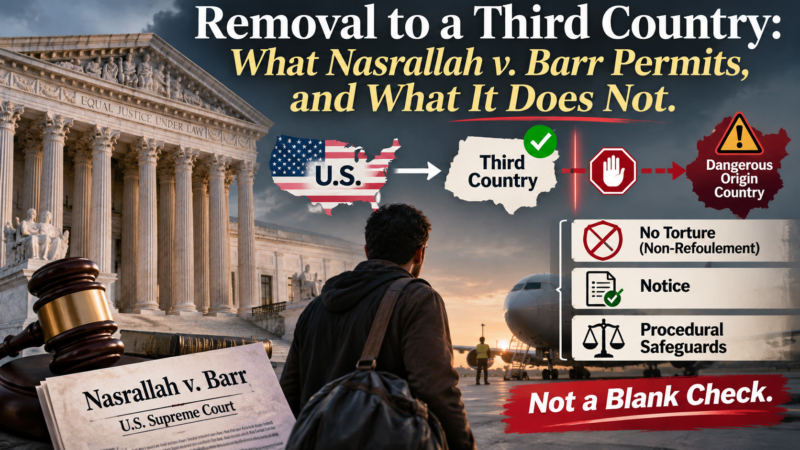
Removal to a Third Country: What Nasrallah v. Barr Permits, and What It Does Not
Part 2 of 7. How a lawful alternative to removal into torture became the center of a dispute over diplomatic assurances, notice, and the risk of onward refoulement.
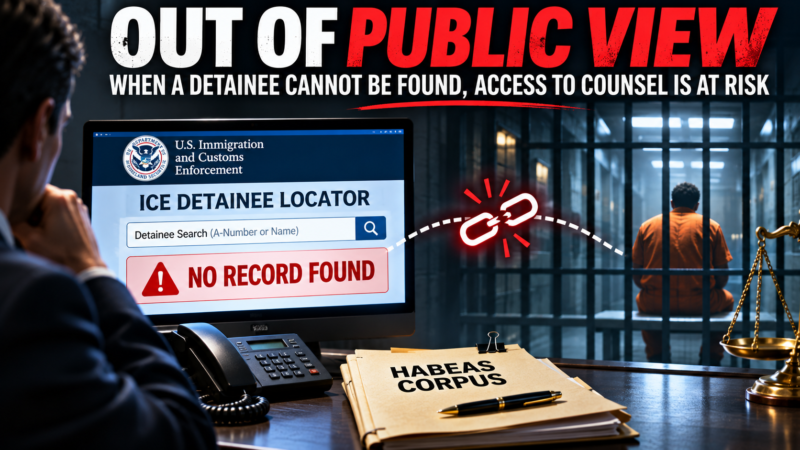
Out of Public View: The Detainee Locator Policy and Access to Counsel
Part 3 of 7. Since mid-September 2026, according to the Associated Press and the court filings that followed, people held by ICE whose orders of removal are final no longer appear in the agency’s public locator. Some of them hold protection against torture or persecution, and the remedies that protect them begin with knowing where they are held.

A Criminal Conviction Does Not End Protection Against Torture
Part 1 of 7. A conviction and a final removal order can make a person removable from the United States. Under the 1998 statute that implements the Convention Against Torture, its regulations, and decisions of the Fifth and Eleventh Circuits and the Supreme Court, neither one permits removal to a country where torture is likely.
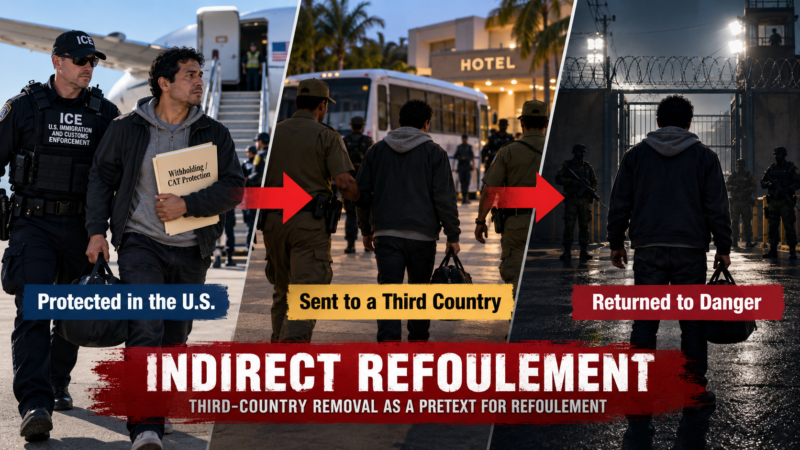
Third-Country Removal Is a Pretext for Refoulement. The United States Is Sending People Its Judges Protected Back to Torture and Persecution Through Transit Countries in Africa and Latin America.
People US immigration judges protected from return are being flown to third countries that send them home or hold them until they go. Courts, sworn declarations, the receiving governments and 60 Minutes document it. The Coalition sets out the record and the law.

He Reported for More Than Twenty Years. A Federal Appeals Court Says ICE Broke Its Own Rules When It Took Him Back.
On 21 October 2026 the Tenth Circuit held that ICE broke its own rules by not promptly interviewing a man it re-detained after more than twenty years on supervision, and that re-detention does not restart the six-month Zadvydas period.
What United States Courts Have Held on Removal to a Third Country, and What They Have Not
What United States courts have held on the protection, the power to remove to a third country, diplomatic assurances, detention, notice, jurisdiction and proof, and the questions no court had decided as of 3 September 2026.